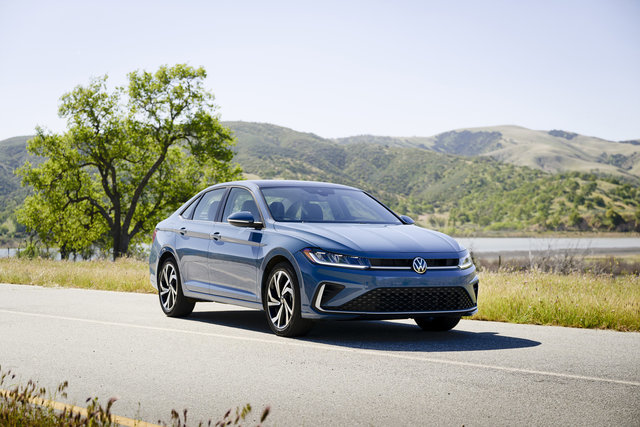
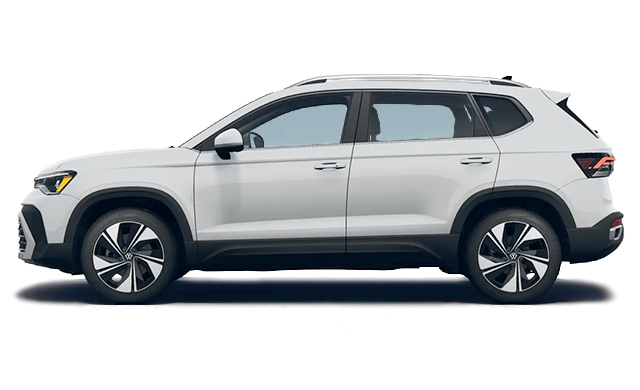
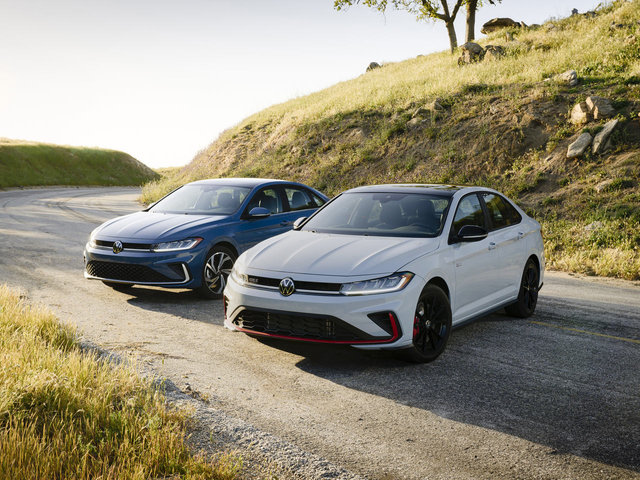
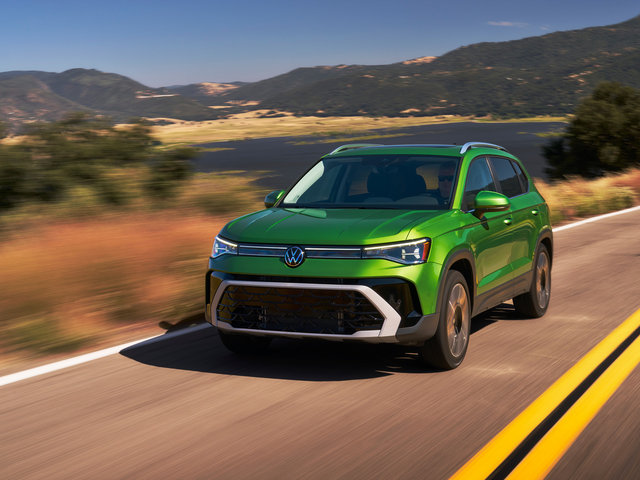
The 2026 Volkswagen Jetta and 2026 Volkswagen Taos solve different problems for British Columbia drivers. The Jetta prioritizes sleek efficiency and fuel economy in a sedan package. The Taos offers elevated seating position and cargo flexibility in a compact SUV. For Coquitlam drivers navigating tight parkade stalls downtown or loading gear for a weekend trip to Manning Park, understanding the real-world differences between these two models helps you make the right choice.
Both vehicles share Volkswagen's quality and technology, but their dimensions, capabilities, and interior layouts tell very different stories.
Dimensions: Parkade-Friendly vs. Cargo-Ready
The most immediate difference between the Jetta and Taos shows up in their footprints. The 2026 Jetta measures 4,738 mm in length, 1,799 mm wide (excluding mirrors), and stands just 1,465 mm tall. The 2026 Taos stretches to 4,467 mm long and rises to 1,638 mm in height (FWD models; 4MOTION models reach 1,654 mm).
What this means in practice: The Jetta is 271 mm longer than the Taos, making it slightly more challenging in tight end-to-end parking situations. With mirrors extended, the Jetta spans 2,037 mm while the Taos reaches 2,097 mm—a 60 mm difference that matters in narrow parkade stalls common in Coquitlam's newer condo developments. The Jetta's lower height (173 mm shorter than the Taos) gives it an advantage in underground parking with height restrictions.
Both vehicles share nearly identical wheelbases—2,686 mm for the Jetta and 2,689 mm (FWD) or 2,680 mm (4MOTION) for the Taos—which means similar interior space efficiency despite their different body styles.
Key Dimension Comparison:
- Jetta: Longer, narrower, lower profile
- Taos: Shorter, wider, taller stance
- Jetta advantage: Low-clearance parkades, narrow driveways
- Taos advantage: Ground clearance, visibility, cargo access
Cargo Capacity: Trunk vs. Hatch
The body-style difference creates the biggest practical gap here. The 2026 Jetta offers 399 litres of trunk space—adequate for groceries, gym bags, and daily commuting needs. The 2026 Taos delivers 1,866 litres with all seats behind the first row folded down, creating a massive 1,467-litre advantage when you need maximum cargo capacity.
For Coquitlam families making Costco runs or weekend trips to Harrison Hot Springs, the Taos's hatchback design and fold-flat rear seats provide significantly more flexibility. The Jetta's traditional trunk works well for protected cargo storage and maintains a cleaner separation between passenger and cargo areas, but you can't fit a bike or large furniture without folding seats through the trunk pass-through.
The Taos also offers easier loading thanks to its higher cargo floor and wide-opening rear hatch. No awkward bending or lifting over a trunk lip—just open the hatch and slide items in.
Engine Performance: Shared Efficiency, Different Output
Both vehicles use Volkswagen's TSI turbocharged technology, but with different power levels. The 2026 Jetta features a 1.5-litre turbocharged engine producing 158 hp and 184 lb-ft of torque, paired exclusively with an 8-speed automatic transmission. The 2026 Taos steps up to a 1.5-litre turbocharged engine delivering 174 hp and 184 lb-ft of torque.
Despite the Taos's 16 hp advantage, the Jetta's lighter curb weight (1,361 kg vs. 1,456 kg for FWD Taos) helps close the performance gap in daily driving. Both vehicles deliver responsive acceleration for highway merging and confident passing power on the Trans-Canada Highway.
Fuel economy slightly favours the Jetta at 7.2 L/100 km combined, compared to 7.4 L/100 km for the FWD Taos. If you opt for the Taos 4MOTION AWD, combined fuel consumption rises to 8.4 L/100 km—a trade-off for enhanced traction in wet British Columbia conditions.
Powertrain Comparison:
|
Specification
|
2026 Jetta
|
2026 Taos (FWD)
|
2026 Taos (4MOTION)
|
|
Engine
|
1.5 L TSI Turbo
|
1.5 L TSI Turbo
|
1.5 L TSI Turbo
|
|
Horsepower
|
158 hp
|
174 hp
|
174 hp
|
|
Torque
|
184 lb-ft
|
184 lb-ft
|
184 lb-ft
|
|
Fuel Economy (Combined)
|
7.2 L/100 km
|
7.4 L/100 km
|
8.4 L/100 km
|
|
Curb Weight
|
1,361 kg
|
1,456 kg
|
1,561 kg
|
Interior Space: Sedan Comfort vs. SUV Versatility
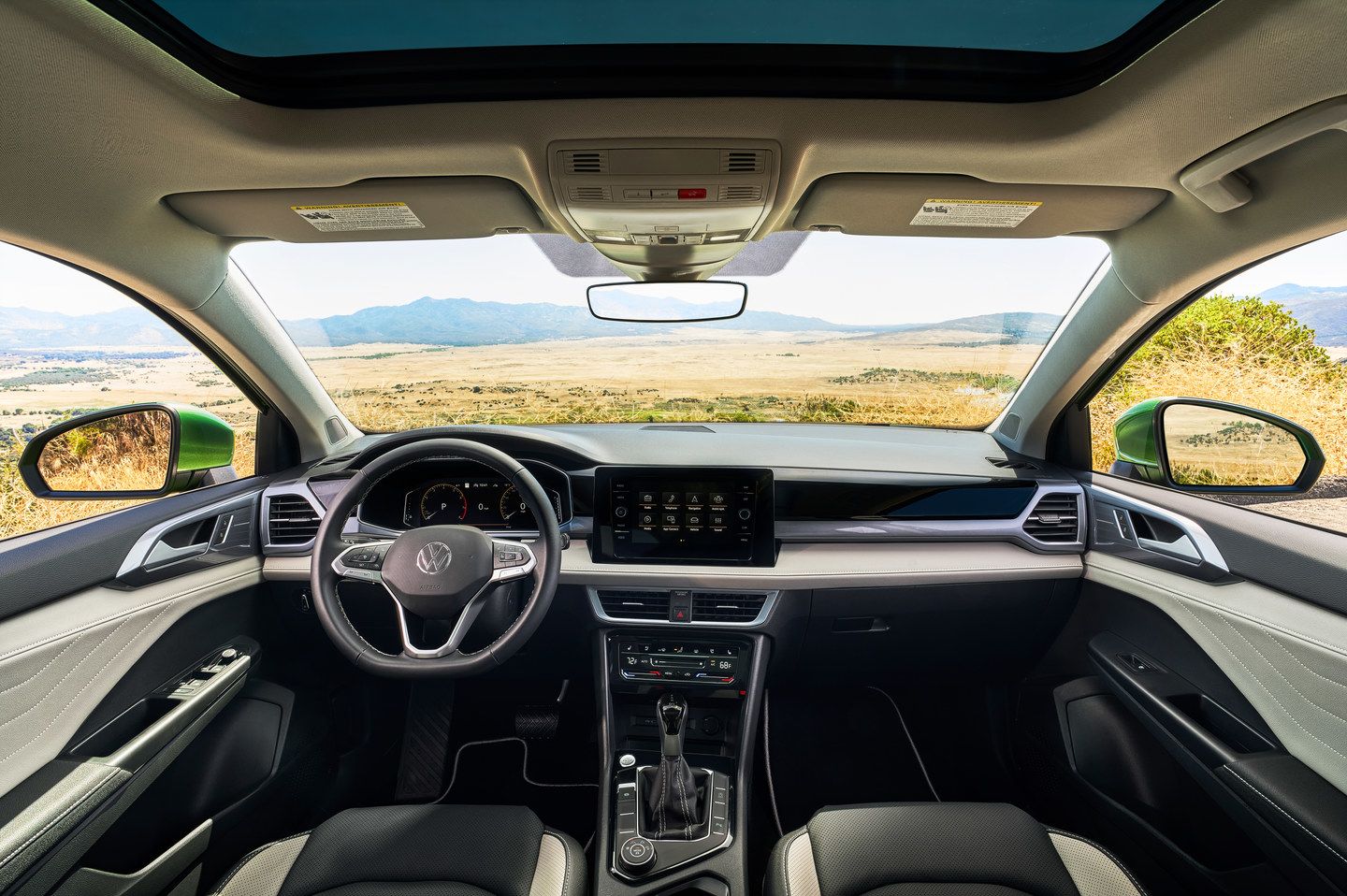
Both vehicles offer comfortable seating for five adults, but the experience differs. The Jetta's sedan profile creates a more traditional car-like seating position with easier entry and exit for passengers with mobility considerations. The Taos's elevated seating position (173 mm higher) provides better forward visibility and a commanding view of traffic—particularly valuable in Coquitlam's busy intersections and multi-lane roundabouts.
Rear-seat passengers in both vehicles enjoy generous legroom thanks to similar wheelbases. The Taos's taller roofline provides more headroom for taller passengers, while the Jetta's lower seating position creates a sportier, more enclosed feel.
The Taos offers 60/40 split-folding rear seats with a centre armrest and pass-through as standard across all trims. The Jetta matches this configuration, but the sedan's trunk opening limits what you can actually fit through the pass-through compared to the Taos's full hatch access.
Technology & Features: Trim-Level Parity
Both vehicles share Volkswagen's latest technology suite across their trim levels. Base Trendline models in both lineups include an 8.0-inch touchscreen infotainment system, Volkswagen Digital Cockpit (8.0-inch instrument cluster), wireless App-Connect (Android Auto, Apple CarPlay), and dual-zone electronic climate control.
Step up to Comfortline trim in either vehicle and you gain Volkswagen Digital Cockpit Pro (10.25-inch configurable instrument cluster), satellite navigation, and the Volkswagen Premium Audio System with six speakers plus subwoofer. Highline trims add leather seating surfaces, ventilated front seats, and interior ambient lighting customizable up to 10 colours.
Safety technology varies by trim level. The Taos Trendline includes Travel Assist (Adaptive Cruise Control, Lane Assist, and Emergency Assist) as standard. The Jetta Trendline includes standard cruise control; Adaptive Cruise Control arrives on Comfortline, and Travel Assist is available on Highline or with the Sport Package. Both models offer Front Assist (Automatic Emergency Braking), Side Assist (Active Blind Spot Monitor with Rear Traffic Alert), and a comprehensive airbag system across all trims.
The Taos Trendline 4MOTION and higher trims add Hill Hold Assist and Hill Descent Control—useful features for British Columbia's varied terrain, though less critical for primarily urban Coquitlam driving.
Which Vehicle Fits Your Coquitlam Needs?
Choose the 2026 Jetta if you:
- Prioritize fuel efficiency (7.2 L/100 km combined)
- Navigate tight underground parkades with low clearances
- Rarely need maximum cargo capacity
- Prefer a sportier, car-like driving position
- Want the lowest entry price point
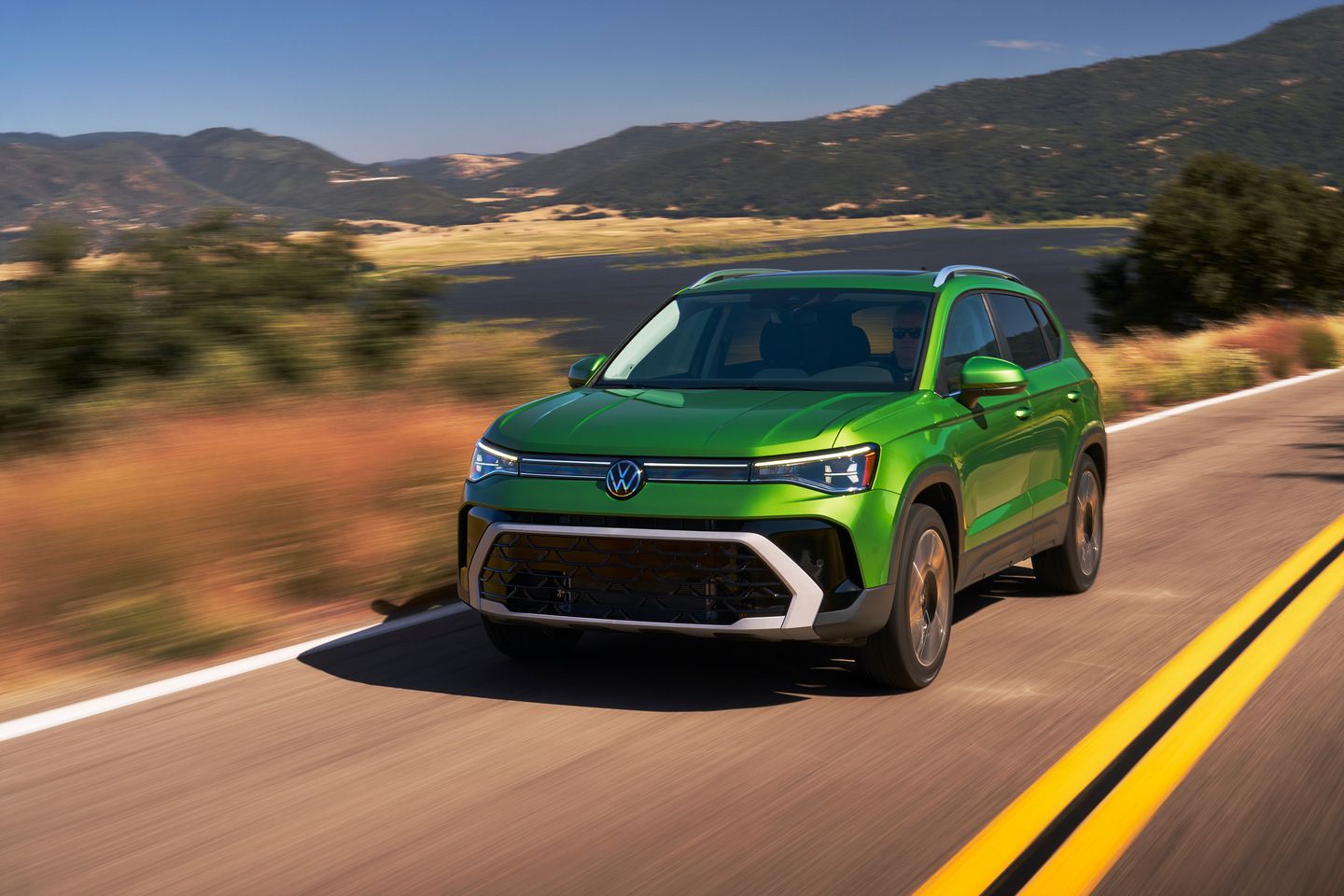
Choose the 2026 Taos if you:
- Need flexible cargo space for active lifestyles
- Value elevated seating position and visibility
- Want available 4MOTION AWD for year-round confidence
- Frequently transport bulky items or sports equipment
- Prefer easier loading/unloading access
Both vehicles deliver Volkswagen's reputation for solid build quality, refined interiors, and German engineering. The Jetta excels as an efficient daily driver for commuters and small families who value fuel economy and compact dimensions. The Taos serves active lifestyles better with its cargo versatility, higher seating position, and available all-wheel drive.
Experience Both Volkswagens at Journey Volkswagen of Coquitlam
The best way to decide between the 2026 Jetta and 2026 Taos is to experience them both in your daily driving environment. Our team at Journey Volkswagen of Coquitlam can help you compare these models side-by-side, discuss your specific needs, and arrange test drives that include the parking situations and routes you navigate most often. Visit us in Coquitlam to discover which Volkswagen fits your lifestyle best.